 |
Surf Fishing for Sea Perch |
 |
|
|
Surf Fishing for Sea Perch |
|
The Washington and Oregon coasts offer a multitude of locations for
"Surf Fishing". This term generally refers to surf fishing off
the sandy beaches where clam digging is normally done. These sea
/surf perch are abundant in the above waters and used to be open the year around,
now, it is only open from the 2nd Saturday in March to to the 3rd Saturday
in October, with a catch limit of 12.
There is a surf perch fishing derby on Long Beach, Washington every summer in May as seen below, with one started at Westport WA. in 2006, where many fisherpersons, young or old, do participate.
This fishery can be something you may consider getting the kids or grand kids involved in. However a saltwater or a combination fishing license is required in the state of Washington. Surf fishing also fits in nicely with a claming outing in the spring or fall.
| Picture supplied by Andy Le from Portland OR and these redtails were caught in Newport OR. in 2005. |
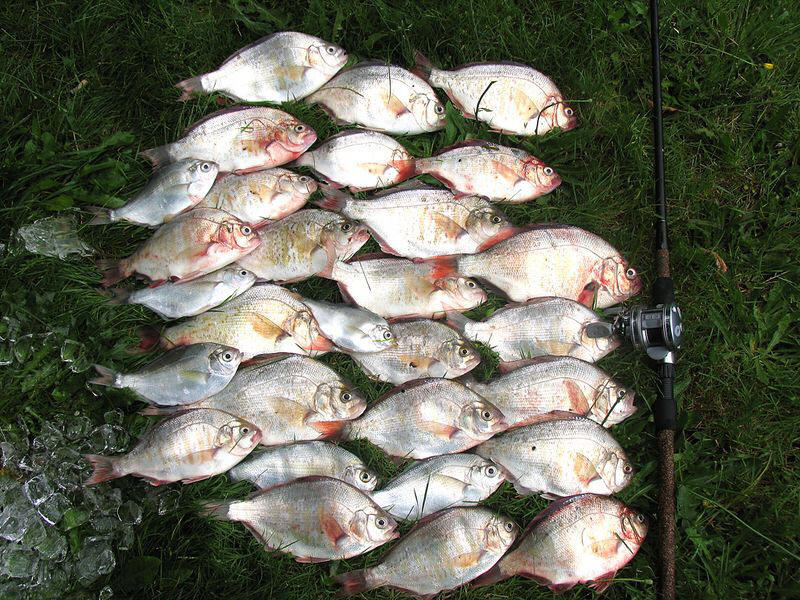 |
The Fish Themselves : Sea perch many times called surf perch are widely available in our marine waters. The three most popular are red-tail surf perch, striped sea perch and then pile perch. Red Tail surf perch are the largest and most abundant of the three species of perch caught along our coasts. Their fins have a distinctive reddish coloring and dark vertical bars can be seen on their sides. These fish, depending on the exact specie, can reach a length of 17" and can weigh in at 2# to 3#, with the average slightly smaller. The current Washington state record for red tail surfperch (Amphistichus rhodoterus) is 4.05# and was 16" long, while striped surf perch (seaperch) (Embiotoca lateralis) is 2.07#.
The females will be the largest of this specie.
They are an eager biter, making for
younger fisherpersons enjoyment. Like all
sea/surf perches, the red-tails
and striped sea perch are oviviviparous – which means instead of laying eggs like
most fish species, the females are internally fertilized in the fall and hold their eggs in their bodies until they hatch, and release live offspring
about 1" long into the water in about 8 months.
Bait :
These fish will eat anything that they can
find or chase down, which means clams, shrimp, smaller fish like sand lances or
even surf smelt.
The
old standby bait has been clam necks. As this may be one of the natural
food for them. It has been said that these fish will bite off the necks of
clams that are feeding "necking in the surf". With the reduced seasons of
clamming, the perch fisherpersons have to freeze their clam necks. But in
freezing and keeping this bait for any length of time, they dry out. If
this happens to your bait, it is
suggested to place this bait in a plastic bag partly filled with clam nectar or
clam juice used to add to clam chowder then marinate the bait a day or so before
your trip.
Some fishermen have said they have great success on
ordinary night-crawlers, man, the fish love them, and they hook easy.
Or fishermen resort to other baits. The easiest to acquire and equal in natural abundance for these fish would be sand shrimp or even store-bought prawn. They however do not stay on the hook for the extended time as the tougher clam necks do unless you wrap them with stretchy thread. You can just rip the tails off and slide them up the hook like a worm but save the heads and use those if you run out of tails (again use stretchy thread) to attach to the hook.
Sand shrimp can be dug on the beaches, with some saying a low tide being best, while others say a high tide is better. I guess it is where you plan on digging. I have found them higher on the beach, in this instance then the higher tide would be best. Look for small volcano like mounds with holes in the top. Use a round clam gun that is common now. You can actually do better by pumping than digging. Just find an area with a lot of shrimp holes and put your thumb over the hole on your clam gun and push it into the sand or mud. Keep this up for a bit. Release the pressure of your thumb on the backstroke and close it again on the downstroke. You apparently pump enough air or pressure into the area that they can't stand and the little buggers will come shooting out all over.
Others say you can use a shovel or PVC gun and dig a large hole down until you hit
water, wait a while, the shrimp, seem to migrate into the hole and float
on the water.
Sand or piling worms are
another bait used occasionally. Chunks of squid also will
work for bait and it stays on the hook well.
If you can not come across any of this bait,
then using a egg snelled steelhead hook, you may be able to use a small sponge
or yarn saturated
with clam or shrimp scent. Some even use a angle worm and marshmellow.
A curly tail or marabou crappie jig works just as good in 1/4 to 1/2 ounce. Just bounce it back over the sand. One favorite jig is white with a pink or red tail, but white and black also are good.
One fisherman as stumbled onto Berkley Saltwater Gulp sand
worms in the 2" size. He says he can't keep the fish off and the bait
stays on very well. They work best off the beach he has found and
not as well off the jetties though. I have used these for other species so
have no doubt he is right. Now, the last time I used some out of the
factory re-sealable Ziploc bag, after a year, I found the seal did not really
work, the liquid dried up and the worms also dried out. I took the
few that were in this condition, placed them in a small Ziploc bag, placed some
liquid shrimp and clam scent in with these dried worms for a couple of days,
which seemed to revive them.
Others even use a small Vibrex
spinner or Rooster Tail.
These fish find their food initially be smell and then sight. Therefore it would be of your benefit to use fresh bait or even use some scent on it. Another idea would be to tie a small amount of Steelhead yarn onto the bait, using it to absorb the scent prolonging your re-scenting. This would also give the lure a chance to prolong the time the fish held it in their mouth (increasing your possibility of hooking them) because the yarn may get tangled in their teeth.
Terminal Gear : The heavier the surf, the heavier gear. Some areas are quite mild and you can easily use a 8-12 steelhead or a 10-20 salmon rod using 2oz. and 3oz. pyramids respectively with 15# test line. Other areas in where the beaches are flatter you may need the 10' surf sticks throwing 8 and 10 ounces (or more) using 30# test line.
There are more than one school of thought here. (1) Typically a pyramid sinker of from 2 to 4 oz. is needed to cast as far as you can in the surf. This sinker dropper can be from 2' to 3' and is attached to a 3 way swivel at the end of the mainline. The leader to the hook needs to be about 3' long and of a slightly lighter weight than the mainline. On this leader a hook of an approx size of from #4 to #1 or larger is attached, with a #1 being preferred by many. The larger hooks may benefit if you are trying to keep the smaller fish off. If you go too small of a hook, they will take the bait, but not get hooked. It has been found that normal steelhead hooks and leader seem appropriate here. The hook tied with a normal egg snell, just like the steelhead egg loop works great, as this can help hold a shrimp onto the hook better than just threading it onto the hook itself. Here is one fishery that WDFW has NOT come down on the fisherpersons prohibiting the use of barbed hooks.
(2) You might consider attaching 2 leaders 12" apart on a 4"-6" dropper with a single hook attached to each. If you tie the hooks on using egg loop tie, that gives you more options as to bait. The reason for this short length, is they tend to stay protruded out and away from the dropper line. As you can see here the leaders are shorter to keep them from tangling with each other. Some fishermen will place the shorter lower leader closer to the bottom or nearer the sinker, but far enough away so it is not right at the sinker.
| Here, I change the length of the leader to maybe 8" as they are not line shy in this roily water | Here are illustrations of possible terminal gear |
 |
 |
| The above illustration used with permission of Russ Mohney from The Chronicle from an article written 11-11-05 | The above illustration used with permission of Russ Mohney from The Chronicle from an article written 03-27-2010 |
Tackle & Type of Conditions : Surf fishing is really easy and there is almost no right or wrong way to go about it. Basic tackle and rigging can be applied. You can even use a regular steelhead or salmon rod. Some use 12lb line tied direct to a 3/4 - 5oz weight (weight will depend on conditions), then tie three even spaced dropper loops starting 12" above the weight. Use the loops to attach #2 or #4 octopus or bait holder hooks. Bait the hooks with clam necks or sand shrimp or Gulp artificial bait. You can also use worms or herring chunks or anchovy pieces or squid chunks. Squid is nice as it stays on the hook well. You also may try to bait each hook with a different bait until you learn what the fish are biting that day.
To get the bait in to the zone, wait for a big wave and then follow it out, cast into the trough, that's the smooth slick water between waves, keep your reel's bale open so line comes off as you run back up the beach before getting hit by the next wave. Once back up on the beach or safe in the shallows you can reel up the slack.
Never Never NEVER EVER turn you back on the ocean while you
are surf fishing. Remember to turn sideways when a wave hits you and keep
moving, or the sand gets washed out from under your feet. You do not want to be the victim of the unforgiving
nature of the sea. It can and does really happen.
Wait about 5
minutes for a bite, if no bites reel in ten feet or so, do this until you find
fish, then try to get your bait in that area each cast. Sometimes the fish
can be out a ways and other times they can be very close.
Also if you are standing in the water even a few inches deep, a little sand pit will form when your are standing on the sand and surf goes out. If you for any reason slightly loose your balance, you will get tripped over knocking you down in the surf. You need to move slightly to left or right to keep that little sand pit from forming too big.
Tackle will depend somewhat on the water you will be fishing. We will classify surf beaches into three different, (1) being a gently sloping, (2) a lightly sloping and (3) a moderately sloping. Each one of these types will have a different breaker/surf pattern that you will need to learn how to read.
These fish do not occupy a deep water with possibly 20' being their limit.
(Type 1) The gently sloping of most Pacific Northwest sandy type clam beaches would require tackle which may have to cast up to a 4 oz sinker 100 yards, (using a heavy special purpose rod and reel), a long rod does not hurt at all. Many dedicated surf fishermen will use a heavy 12' rod and a line weight enough as to not break off the sinker when casting.
A suggestion is if you have to cast this far with this heavy weight, you might want to wear a leather glove or some form of protection on your left index finger to protect it from being cut during the casting.
Using this heavy type gear, which is similar to the East coast Stripped Bass fishing, you may cant to CLICK HERE to learn about the "Off The Beach Casting Method".
(Type 2) Now if you can find a beach has more of a slope, or a #1 beach with shallow troughs either parallel or 90 degrees to the shoreline which may hold fish, meaning the fish may be closer to shore, then a salmon rod with a spinning reel would suffice. Probably the most used rod/reel combo would be a 8 1/2' steelhead / medium salmon rod with a spinning reel capable of holding a minimum of 100 yards of 12# to 15# test monofilament line.
Here it is suggested you use as light a sinker as needed to hold your gear on the bottom for a reasonable length of time. A 1 oz. or 2 oz. would be ideal, but depending on the water conditions you may be forced into using a heavier sinker and tackle. This also may depend on how far out in the surf that you are casting. But remember these fish may not be way out, as they are trying to pick up feed off the beach. Most times, just behind the first series of breakers is the farthest you would ever need to cast.
(Type 3) Now we get into a different type of beach which may have more of a gravel beach that has more slope as compared to sandy tapered beach. This would normally be beaches on the northern Washington beach coast like found near Klalock. Here a lighter rod and reel could be used as casting could be even less than fishing a small river. A heavy trout rod combo could be considered.
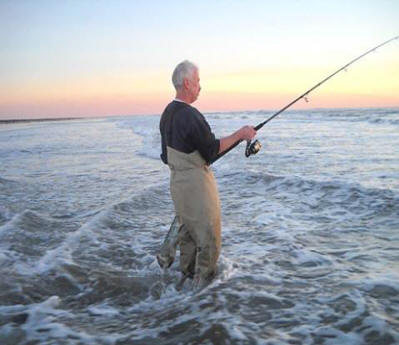
Winter fishing can be productive, just that you have to dress for it. Most reels used here will be spinning type reels as seen in the photos below. Level-wind reels work great also, IF you are used to using them, and have the ability to control backlashes.
| A NICE day on the beach | Here is the pose of a typical fisher but on a nicer day than on the left. |
 |
 |
Another thing would be some method of carrying extra tackle with you. What works best for many is the canvas rubber lined creels made by Danielson. They are inexpensive, have a large rubberized inner pouch, have a couple of pockets on one side and have a shoulder strap. Some also use a small day backpack. Or use a cheap carpenters nail apron.
Remember that if you are going to don chest waders for this endeavor, and you are the driver of the vehicle, you may want to remove your vehicle keys from your pants pocket BEFORE you pull the waders all the way up. You may just want to get into the vehicle for something and believe me, trying to reach down into your pants pocket INSIDE your waders, well it can be done, but usually not in any speedy manner.
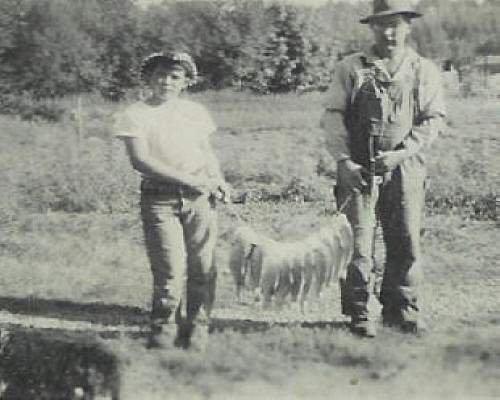
| Here the author at the age of about 13 & his father with a string of nice sea perch taken off Moclips beach |
 |
Time to Fish : Early morning high tide is hard to beat. Most surf fishermen will tell you that the incoming tide is the best, as the fish will be moving up the beach to snatch up anything left by the outgoing tide. However you may also be fighting weeds being washed ashore. A few dedicated surf fishermen may confide that fishing can be productive all the way thru and into the bottom of the outgoing. Now this makes a lot of sense in that you are not fighting any weeds, plus the waves are pulling your gear outward instead of toward you. Others say high slack tide is best. I think it is important if you can find a depression, trough or deeper spot that they could congregate in.
The best fishing is when the surf is moderate to calm like 2 to 4' waves'. When the surf is rough and the waves are breaking far from shore seems to not be conducive to good fishing. It is a common belief that at this time the fish retreat from the rough waters and feed farther from shore. When fishing rough water conditions is usually slow and the surging surf can be dangerous so maybe best to give in to Mother Nature and head in.
For those of you who clam dig, this can be an additional chance for recreation during the day since most of the clam digging is in the afternoon, even into dark, depending on the time of the low tide. This gives you a chance to surf fish at a different time than the clamming takes place.
Another thing to take along is a crab gage. Perch bite very aggressively, but crab just grab on and hold. If this happens, give a gentle but positive pull, dislodging them from the sand and slowly pull them in. Your wife or significant other may welcome you a lot more if you bring her back a legal crab.
|
Here
a well dressed successful fisherman waiting for another bite
at Grayland WA. |
 |
Driving on the Beach : A possible problem driving on the beach during the summer is that with little rain, the upper sand becomes so dry that unless you have a 4 wheel drive vehicle, good tires and know how to drive in sand that you can very well get stuck. It is not that bad once you get onto the wet beach itself, but getting on or off at the approaches is where the fun can come into play. Getting off may be worse because you many times can not really see where the main entrance/exit driveway is. If you start to bog down, do not stop, but just keep the power to it but without spinning the wheels. Do not give it gas to speed up as you will just bury the tires.
Also in Washington state, the beaches are usually considered State property so driving on them is covered by Department Of Transportation speed limit laws in force. One is that you can not drive on the clam beds which are closer to the water. And there is a 25MPH speed limit. There also may be restrictions as to access.
| Here a successful fisherman with a nice specimen |
 e e |
Method : Location is the prime thing here, as you need to fish where the fish are. Here are a couple of methods used when chasing surf perch.
(1) Surf perch can be caught off the sandy razor clam type beaches. However most fisherpersons fish too far out, casting over the nearer fish. You have to pick the right spot, not just cast anywhere into the surf. These fish are looking for food that washes out as the waves pass over. At low tide do your inspection/research for the right area. Look for flats or "Spits" if you are a clam digger. Ideally these flats will be home to sand shrimp, that when the tide comes back in, will provide a dinner table for the fish.
(2) In other areas not conducive onto the sand of a steeply-sloped beach, they wash food like sand crabs into the water. When the tide is high a "pool" will form at the base of the slope and will allow the fish close and safe access to the food supply which will be washed down the steep slope as the waves churn the sand and the water when the wave retreats. The waves also break closer to shore on steep beach so the fishy water will be much closer and easier to reach.
Find a trough that this food collects in and you have found the fish. But be aware that they will be moving all the time, so if you catch a few, then it goes dead, move one way or the other to try to intercept them again.
Also you will find that it is unusual for the water to be coming directly onto the beach, but there will be a current pushing the water along the beach. This means after your first cast, you will be able to tell which way the current is moving, adjust your fishing methods accordingly.
If you see a seal or seals swimming in the surf a few yards out, note that they are fishing for the same prey as you are.
A good strategy would be to find a prospective spot, cast, then move a little up or down the beach with each successive cast until the fish are located. Then your next cast can be adjusted so the bait will pull through the same area. The fish are there possibly because of a depression or it liked something about the wave or current action. The normal method is to cast far out and up current and reel in slowly as the bait arcs around to about a 45 degree position. Then reel in and start over. This will usually take about 4 to 5 minutes.
A more sophisticated method would be to drive down the beach at minus low tide and pick out all the big depressions or troughs that where when the tide comes in, that food will be washed into and the perch may then inhabit. Walk out to inspect any possible good looking location. Mark each spot on a handheld GPS unit. If you do not have a GPS, then drive tall stakes with flagging on the top in the sand to mark your spot on the upper beach. Make notes as to which location was furthest out and which ones would be good as the tide comes in on a piece of paper so that if the first one you try does not produce, you have a backup or two. The key is finding calmer areas where the fish will be in feeding close enough to reach them.
Once you decide which spot looks the best, head for it as the tide comes in. The fish will move around in these troughs so it may be best to keep moving your casts around, but stay on the same "hole" for a while. If your bait happens to be on a shelf and not in the trough, you may not get as many bites as your fishing partner a few feet away down the beach. Cast out and slowly reel in, moving your bait across the bottom. This also keeps the sinker from becoming "sanded in".
| Here a specimen of "Beachfront Property" |
 |
Here is a lesson if you enter the derby below, be there a week or so before, mark some spots, then try out these marked locations.
Pick your spots the day of the derby and then camp on the best one for at least an hour
before the tide is best at that trough. Don't go searching at this time because
other fishermen will stake it out as the tournament starts. Remember
IF you are here to try and to win money, you will need to keep your lines in the
water for the maximum exposure to have a chance to catch the most fish.
These fish travel in small schools which usually consist of the same size fish, so if you are regularly getting small fish, you may want to change your casting location hoping to find a school of larger fish. Schools often congregate within 30 feet of the shoreline, darting in an out of the surf's surge.
If you can cast far enough, then you can stay on the dry beach. Others may want to don't hip boots or chest waders and enter the shallower parts of the surf to do their casting from. If you do use chest waders, be sure to secure it with a belt so if you get hit high by a wave, the water does not fill the top, or wear a rain jacket over the waders. A point of safety here, be ever vigilant of the waves and move around slightly to keep the waves from washing out around your boots, creating a hole that you may stumble in.
You may have to move to a different location if your best pick was one that is subject to lots of floating grass as the tide comes in. It is unproductive if every time you pull in a large gob of sea grass.
Here is
what has worked for a friend:
- A good minus tide. Start an hour before and fish a couple hours into
the incoming. Starting at this time defines more of the irregularities in
the beach and helps pinpoint where to fish.
- He has also found there's
kind of a magic zone well out into the waves where they will concentrate.
If there is food in the water, 10" is not too shallow. Find a school and it will be bites almost every cast. Fall short of this
zone and his bites go way down. If the surf's up at all it's tough to get
into this zone. He has to wade out deeper than he should to help reach
this zone and does not recommend this.
- They are infinitely more fun on
light gear and given a chance, are damn good fighters. He regularly
uses a 9' 6" steelhead spinning rod. 1/2 to 1 oz on 8-10# test gets it out there
a ways. Finesse is a must as it's quite a load on the rod. But hook
one of those big 2-3lb females or two at a time if your fishing tandem hooks and
it's game on on that light gear. What a hoot!
- Clam necks are over
rated, and as crab bait compared to fresh sand shrimp (my favorite) or a chunk of
raw prawn.
- They can be caught year around but he has found spring/early
summer to be best. All of our central/south coast beaches in Washington
have decent populations.
- For a change up from bait, pitch a small buzz
bomb or dart in orange/chartreuse with white. More fun in his opinion than
fishing bait and it can be just as productive. He has also had good luck
with white and orange grubs on a jig head.
| One of the breakwaters on "the point" at Westport. |
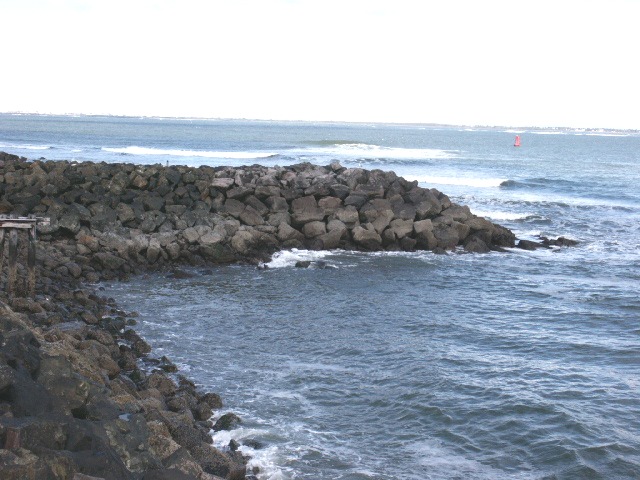 |
The above picture is of one of the revetment
breakwaters on
"the point" looking toward the ocean from Westport. This can also be a good location to use
the same tackle as used for surf perch fishing, with the chance to also catch black
sea bass, flounder, or even a ling cod.
Pile perch are more common in Puget Sound, where they're often caught around docks, floats and piers on an incoming tide. They are a smaller Specie than the surf perch. One method used around the docks is to use herring jigs. These are a section of line with many short leadered small gold colored hooks attached to the mainline. These simulate Krill or many smaller insects that these fish feed on.
Safety : This fishery can well be one that the whole family can participate in. However, it is highly recommended that EVERYONE who fishes wading IN THE WATER wear a Personal Flotation Device. The best is the newer self inflating type that are worn like a shoulder harness. They are not anywhere as bulky as the older units and are quite comfortable to wear. The reason for wearing these here is that if you are wading in the surf to get farther out, then a sneaker wave comes in and knocks you down, things can get pretty disastrous very quickly.
Another thing to be aware of is if you standing still in the water that is moving, even for a minute in a shallow water, the tidal current going OUT ESPECIALLY is faster than the incoming waves, AND will eddy around you, and will go faster to your side, creating a washed out area. Then when you take a step to move and are not expecting a hole, you can easily loose your balance and fall. I had a friend loose his life just a few years ago in what we expect was this situation.
Also if children are present, be sure to have them wear a
PDF, as you the fisherpersons can not watch them all the time, if you are
concentrating on fishing also.
If you get caught to where you are down
and being carried out, look at the illustration below. But remember that on
the Washington/Oregon coasts the current usually is toward the north.

If fishing off of jetty rocks, make certain before you begin fishing that you have a spot that will allow you a very fast escape route for any reason. If the spot you find is difficult to get down to it will take to long to get out of if a large series swell comes your way. This also happens frequently. If fishing on the ocean side of a jetty be extra careful. The surge is powerful enough to move boulders or wash you right off of one and in to a hole. Be prepared and fish safe with a friend if possible
Share the Beach : With the advent of "Surf Boarding", there may be surfers where you want to fish. Be courteous and offer to share, or move to another area out of their way. They need big waves but in somewhat protected areas to do their thing, these areas may well be confined to certain locations as to compared to the water that the fishermen will be using. You can move to a new area a lot easier than they can, plus if they are there, the fish may not be.
Limit
:
The
state of Washington's catch limit on sea perch is 12 per day.
Method of Preparing the Catch :
All specie of sea perch are also a very
good eating fish if large enough to make it worthwhile. These fish can be filleted,
and skillet fried, deep fried in
peanut oil, batter dipped, or many other methods which can produce a nice change of diet for many.
It, like most white meat fish seems best if eaten as fresh as possible, meaning
not frozen.
---------------------------------------------------------------------------------------------------------------------
Long Beach Washington, Peninsula Community
Surf Perch Derby
For a link to the derby website for information & entry forms http://surfperchderby.com/
Annual Surf Perch Derby, always in May (the Saturday after Mother’s Day each year).
Copyright © 2004 - 2025 LeeRoy Wisner,
with credit given for original illustrations.
All Rights Reserved
Back to the Main Ramblings Page
Originated 6-05-04, Last updated
05-14 -2025
Contact the author
Beach Perch
Fishing Derby at the Westport/Grayland / Tokeland area May 26, 2007
Entry fee $20.00, no ticket
sales after 9:AM derby day
& weigh in closes at 4 PM,
Awards at 5PM at weigh in station at Angler Charters across from float 8 in
Westport
pay out to be cash, based on percentage of ticket sales
360-268-1030 or www.anglercharters.net